 By James Frick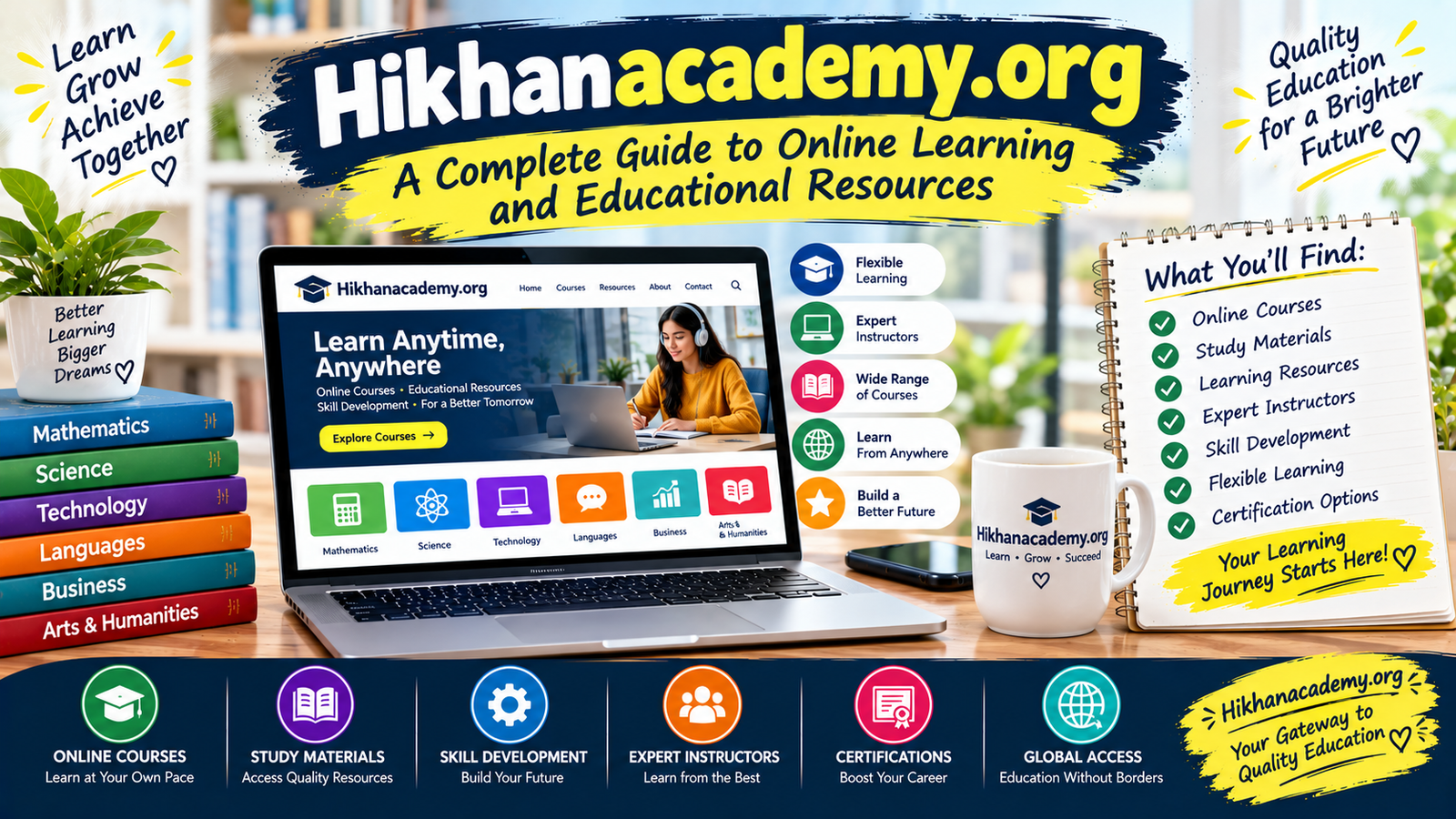
In today’s digital world, online education has become an important part of how students, teachers, and lifelong learners develop knowledge and practical skills. Websites focused on educational content can make learning more convenient by providing access to lessons, study materials, tutorials, and other resources from almost anywhere. Hikhanacademy.org is a associated with an online educational resource website that readers may encounter while searching for learning materials, educational technology, and study-related information.
When exploring any educational website, it is important to understand what type of resources it provides, how its content is organized, and whether the information is suitable for your particular learning goals. This guide explains the potential value of hikhanacademy.org and discusses how learners can approach online educational resources effectively.
What Is hikhanacademy.org?
hikhanacademy.org is a website that presents educational and learning-related information. Search results for the site describe resources involving lessons, research, educational technology, tools, and other learning materials.
The growing popularity of online education means that learners frequently search for websites where they can study independently. A useful educational platform should make information easy to discover and organize resources according to subjects, learning levels, and individual needs.
For students, an educational website can be useful for reviewing difficult concepts, finding additional explanations, and developing a regular study routine. Teachers may also benefit from educational resources that provide lesson ideas, teaching materials, or technology-related information.
Why Online Educational Resources Are Important
Traditional classroom learning remains valuable, but online resources provide additional flexibility. Students can study at a convenient time, repeat difficult lessons, and explore topics beyond the classroom curriculum.
Some major benefits of online educational resources include:
- Flexible learning schedules
- Access to educational articles and lessons
- Self-paced study
- Additional practice opportunities
- Resources for teachers and educators
- Support for independent research
- Access to technology-related learning materials
- Opportunities to review previously learned concepts
The best approach is to use online resources as a supplement to learning rather than depending on a single website for every educational need.
Educational Content and Learning Materials
One of the most important aspects of an educational website is the quality and organization of its content. Search information about hikhanacademy.org describes educational technology archives containing lessons, research articles, lesson plans, datasets, multimedia resources, and software-related materials.
Different learners require different types of content. Some students learn best through written explanations, while others prefer videos, practical exercises, examples, or interactive activities.
A well-organized educational resource can therefore help users locate information according to:
- Subject
- Difficulty level
- Learning format
- Course or topic
- Publication date
- Educational purpose
- Research requirements
Using filters, categories, and relevant keywords can make it easier to find appropriate resources.
How Students Can Use Online Learning Websites
Students can use educational websites in several ways. One of the simplest methods is to identify a specific topic that needs improvement and search for lessons or explanations related to it.
For example, instead of searching broadly for mathematics, a student might search for algebra, equations, fractions, geometry, or another specific concept. Narrow searches generally make it easier to identify useful learning materials.
A productive study routine can include:
- Choosing one learning objective
- Reading or watching an introductory lesson
- Taking notes
- Practicing related questions
- Reviewing mistakes
- Testing understanding
- Moving to a more advanced topic
Consistent practice is especially important. Khan Academy’s official learning guidance similarly recommends choosing subjects, focusing on specific units, reviewing concepts, practicing, and building a regular learning routine.
Resources for Teachers and Educators
Online educational resources are not only useful for students. Teachers can use digital materials to supplement classroom instruction and create additional opportunities for practice.
Educational archives and resource websites can help teachers discover lesson plans, research papers, multimedia resources, datasets, and technology tools. These materials can provide inspiration when preparing lessons or developing classroom activities.
Teachers should always check the quality, accuracy, age appropriateness, and licensing information of educational material before using it with students. If a resource is adapted from another source, proper attribution and licensing requirements should also be respected.
Using Search and Filters Effectively
Finding useful information online is partly a search skill. Instead of entering a very broad phrase, users can combine several relevant keywords.
For example, a learner interested in educational technology might search for:
- Educational technology lessons
- Online learning resources
- Digital classroom tools
- Teaching technology
- Student learning activities
- Educational research
- Online study materials
Some educational archives also use filters for subject, format, date, and licensing, which can help users narrow large collections of information.
Importance of Checking Information
Not every website on the internet should automatically be considered an authoritative educational source. Students and teachers should verify important information before using it for assignments, examinations, research, or professional purposes.
When evaluating a website, consider:
- Who created the content?
- Is the information current?
- Are sources or references provided?
- Is the material educationally appropriate?
- Is the information supported by reliable evidence?
- Are copyright and licensing details available?
- Does the content agree with trusted educational sources?
This is particularly important when a website’s name resembles another well-known educational organization. Users should carefully check the domain name and website ownership before entering personal information or assuming that two websites are officially connected.
hikhanacademy.org and the Broader Online Learning Ecosystem
The keyword hikhanacademy.org exists within a much larger online education ecosystem. Today, learners can access educational platforms covering mathematics, science, computing, languages, economics, history, test preparation, and life skills.
For example, the official Khan Academy platform provides free learning materials including videos, articles, practice questions, and lessons. Its stated mission is to provide a free, world-class education to anyone, anywhere.
Khan Academy also provides applications that allow learners to study on mobile devices, practice skills, synchronize progress, and access selected content offline.
Therefore, when researching hikhanacademy.org, users should distinguish between similarly named domains and verify which organization or service operates each website.
Benefits of Developing a Regular Study Routine
An educational website becomes much more useful when combined with a consistent study schedule. Simply visiting a learning platform occasionally may not produce meaningful progress.
Students can create a simple routine by setting aside a specific amount of time each day or several times each week. They can divide larger subjects into smaller topics and track which concepts they have already mastered.
A practical routine might look like this:
- Review yesterday’s material.
- Learn one new concept.
- Complete practice exercises.
- Identify mistakes.
- Review difficult areas.
- Take a short test.
- Record progress.
- Plan the next study session.
This approach encourages active learning rather than passive reading.
Safety and Responsible Use
Students should also practice safe internet habits when using educational websites. Avoid sharing unnecessary personal information, passwords, financial details, or private documents with unfamiliar websites.
Before creating an account, users should check the website’s privacy policy, terms of service, contact information, and security practices. Parents and teachers can also help younger learners understand responsible internet use.
Educational websites should be treated as learning tools, while important academic decisions should be supported by qualified teachers, schools, textbooks, or other authoritative sources.
Final Thoughts on hikhanacademy.org
hikhanacademy.org is a keyword connected with online educational content and resources, and users searching for it may be interested in lessons, educational technology, research, and study materials. The website’s search presence describes resources involving educational archives, lessons, research, tools, and learning materials.
However, users should carefully verify the identity and authority of any educational website, especially when its name is similar to another established education organization. The official Khan Academy platform, for example, is a separate service that provides free educational resources across numerous subjects.
Ultimately, successful online learning depends not only on finding a website but also on choosing reliable information, practicing consistently, checking sources, and creating a structured learning routine. When used responsibly, online educational resources can be a valuable addition to classroom education and independent study.