 By James Frick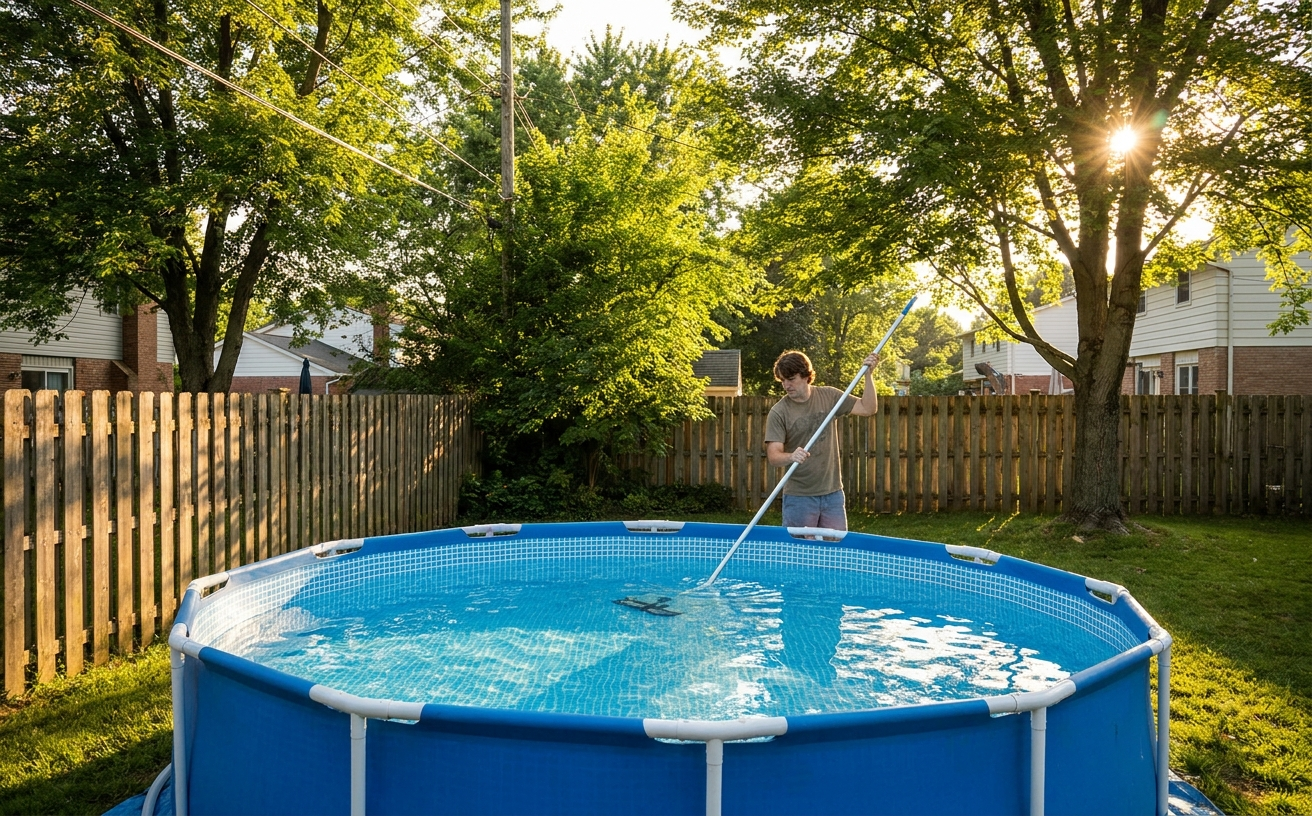
Above-ground pools have a cleaning challenge that inground pools do not. The walls are thin, the floor has no slope, and the water volume is smaller relative to the surface area. Dirt that enters an above-ground pool spreads flat across the bottom instead of settling into the deep end where a single drain can pull it in.
The result is a pool where every inch of the floor collects debris equally, and no single cleaning method reaches all of it efficiently. Understanding how dirt moves in an above-ground pool is the first step to cleaning it properly.
Why Dirt Spreads Instead of Settling
In-ground pools have a deep end where gravity pulls debris downhill. The main drain at the bottom creates suction that draws settled debris toward a single collection point. Above-ground pools have a flat bottom with no slope and no main drain. Debris that settles stays where it lands.
The skimmer in an above-ground pool pulls water from the surface, but it cannot reach what has already sunk to the floor. Once debris is on the bottom, only a vacuum or a robotic cleaner can remove it. This is why above-ground pools often look clean on the surface while hiding a layer of sediment across the entire floor.
Wind also affects above-ground pools more. The exposed walls above the waterline catch debris that would otherwise blow past an inground pool. Leaves, grass clippings, and dust hit the wall and slide down into the water rather than being carried over the pool edge by the breeze.
Manual Vacuuming: The Starting Point
The most straightforward way to clean an above-ground pool floor is manual vacuuming. You connect a vacuum head to a telescoping pole, attach a hose to the skimmer suction port, and push the vacuum across the floor.
The technique matters more than most people realize. Move the vacuum head slowly. Fast strokes stir up sediment before the suction can capture it, leaving a cloud of fine particles that settle back down after you finish. Overlap each pass by about half the width of the vacuum head to avoid leaving stripes of uncleaned floor.
Manual vacuuming works but it is slow. A typical above-ground pool takes twenty to thirty minutes to vacuum thoroughly. For a pool that needs vacuuming twice a week during the heavy season, that adds up to an hour of manual labor every week just for floor cleaning.
The Skimmer Limitation
Most above-ground pools have a single skimmer mounted through the wall near the top. This skimmer handles surface debris well but provides no floor suction. When you want to vacuum, you plug the vacuum hose into the skimmer suction port, which means the skimmer stops skimming while you vacuum.
This creates a trade-off. While you are vacuuming the floor, any new debris that lands on the surface stays there. In pools with heavy leaf or insect load, the surface can accumulate significant debris during a thirty-minute vacuum session.
Some above-ground pool owners install a second skimmer or a dedicated vacuum line to solve this problem. These modifications improve circulation and allow simultaneous skimming and vacuuming, but they require cutting into the pool wall and adding plumbing, which is not always practical.
Robotic Cleaners and Above-Ground Compatibility
Not all robotic pool cleaners work well in above-ground pools. The wall height, water depth, and lack of a deep end create specific challenges that some robots are not designed to handle. A cleaner built for a six-foot-deep inground pool may struggle to navigate a four-foot-deep above-ground pool with thin vinyl walls.
Above-ground-compatible robots tend to be lighter, with shorter cables and simpler navigation. They focus on floor cleaning rather than wall climbing, which is appropriate since above-ground pool walls are thin and do not accumulate the same type of buildup as inground plaster or tile.
If you are deciding how to clean above ground pool floors with minimal effort, a floor-focused robotic cleaner is the most efficient option. It runs independently, does not require the pump to be on, and captures debris in its own filter before it can decompose and affect water chemistry.
The Wall Wipe-Down
Above-ground pool walls accumulate a biofilm ring at the waterline that inground pools rarely develop to the same degree. The thin vinyl or polymer wall material allows sunlight to penetrate, which promotes algae growth at the waterline where warmth and nutrients concentrate.
Brushing the walls weekly prevents this biofilm from establishing. Use a soft-bristle brush designed for vinyl liners, never a stiff brush that could scratch or tear the material. Brush from the waterline downward, pushing debris toward the floor where the vacuum or cleaner can collect it.
The waterline ring is easier to prevent than to remove. Once it hardens, it requires chemical treatment and scrubbing that takes significantly more effort than a weekly brush pass. Consistency here saves considerable time over the course of a season.
Chemical Balance in a Smaller Volume
Above-ground pools typically hold less water than inground pools of the same surface area because they are shallower. Smaller water volume means chemical adjustments are more volatile. Adding the same amount of chlorine to a ten-thousand-gallon pool as to a twenty-thousand-gallon pool doubles the concentration.
This volatility makes testing even more important for above-ground pool owners. Small errors in chemical dosing create larger swings in water balance. Test twice a week minimum, and always dose based on actual test results rather than estimates or habits.
- Add chemicals in small doses and retest rather than adding the full calculated amount at once
- Dissolve granular chemicals in a bucket of pool water before pouring to avoid concentrated hotspots on the liner
- Run the pump for at least an hour after adding chemicals to ensure even distribution
Smaller volumes also mean that contaminants have a proportionally larger effect. Five swimmers in a ten-thousand-gallon pool create the same organic load as ten swimmers in a twenty-thousand-gallon pool. Adjust your chlorine and shock schedule based on usage, not just time.
Building a Weekly Routine
The most effective approach for above-ground pools combines physical cleaning with chemical consistency in a short weekly routine.
- Test water and adjust chemicals at the start of the week
- Run a robotic cleaner or vacuum the floor twice during the week
- Brush the walls and waterline once per week
- Empty the skimmer basket and check the pump strainer
- Shock after heavy use or heavy rain events
This routine takes about thirty minutes of active work per week, with the robotic cleaner handling the floor cleaning passively. Above-ground pools are not harder to maintain than inground pools. They just need a different approach that accounts for the way debris settles and the way chemicals behave in a smaller volume of water.